
Becoming a proficient medical transcriptionist typically requires a combination of education, training, and practice. The amount of time a medical transcription student should practice daily to become very good within one year can vary depending on several factors, including the individual’s starting skill level, the quality of the training program, and the complexity of the medical content being transcribed.
However, here are some general guidelines:
Structured Training Program: Enroll in a structured medical transcription training program or course. These programs typically range from 6 months to a year. During the program, you’ll learn the basics of medical terminology, anatomy, and transcription techniques.
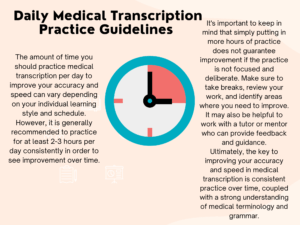
Practice Regularly: To become proficient, consistent practice is essential. Aim to practice daily or at least several times a week. Starting with 1-2 hours of focused practice per day can be a good goal.
Quality Over Quantity: It’s important to focus on the quality of your practice rather than the quantity of time spent. Pay attention to accuracy, correct formatting, and understanding medical terms and context.
Gradual Progression: Start with easier transcription assignments and gradually move on to more complex medical reports as you gain confidence and experience.
Use Actual Medical Dictations: Practice with real medical dictations, including various medical specialties. This will help you become familiar with different medical terminology and accents.
Review and Feedback: Review your transcriptions regularly for errors and seek feedback from experienced medical transcriptionists or instructors. Learning from mistakes is crucial for improvement.
Continual Learning: Stay updated with changes in medical terminology, technology, and transcription guidelines. The medical field is constantly evolving, and it’s essential to keep your knowledge current.
Simulated Work Conditions: Try to simulate real work conditions, including time constraints and distractions, to prepare for the demands of the profession.
Certification: Consider pursuing a medical transcription certification, such as the Certified Medical Transcriptionist (CMT) or Certified Healthcare Documentation Specialist (CHDS) credentials. Certification can demonstrate your competence and commitment to potential employers.
Remember that becoming very good as a medical transcriptionist within one year requires dedication and persistence. Progress may vary from person to person, so don’t be discouraged if you encounter challenges along the way. The key is consistent, focused practice, ongoing learning, and a commitment to improving your skills throughout your career.